Coaches who coach athletes who...
• Fall to the floor crying
…or melt down suddenly, and you’re not sure what triggered it or how to bring them back into participation.
• Shut down, freeze, or go quiet
…especially when overwhelmed or asked to try something new, and nothing you say seems to reach them.
• Show big, baffling behaviors
…outbursts, unexpected reactions, refusing turns, running away, or emotional swings that seem unpredictable.
• Appear anxious or fearful
…cling to you, avoid certain equipment, or panic during transitions or new skills.
• Get overwhelmed by noise, lights, or busy spaces
…cover their ears, squint, hide behind equipment, or try to escape the class area.
• Lose their words when dysregulated
…unable to explain what’s wrong, goes silent, hits, screams, runs, or has too many words and can not stop talking.
• Say “no” to everything
…refuse even simple asks, shut down when a direction is given, negotiate constantly, or escalate when they feel pressured — and you’ve never understood why.
• Struggle with directions + expectations
…need things repeated, forget steps instantly, or can’t follow multi-step cues no matter how many times you try.
You also coach athletes who…
• Can’t sit still or constantly seek movement
…bounce, spin, climb, fidget, or run from station to station because their body needs input before they can listen or learn.
• Seem uncoordinated or trip often
…have difficulty with balance, landing, motor planning, or moving their body the way they intend.
• Learn skills differently from peers
…progress more slowly than expected, struggle with sequencing a skill, or acquire movement patterns outside the “typical” progression.
• Acquire skills differently from their class
…keep falling behind in stations, can’t keep up with group pace, or perform movements that look “off” compared to peers.
• Run into people or objects
…bump into equipment, crash into you, lean on you constantly, or seek physical closeness because their body is craving deep pressure input.
• Have big sensory-seeking behaviors
…crash, bump, push, hug tightly, squeeze peers, or jump excessively — not to misbehave, but because their body needs more sensory input than the gym currently provides.
• Become overstimulated and dysregulated quickly
…especially during rotations, transitions, warm-up lines, or high-energy stations.


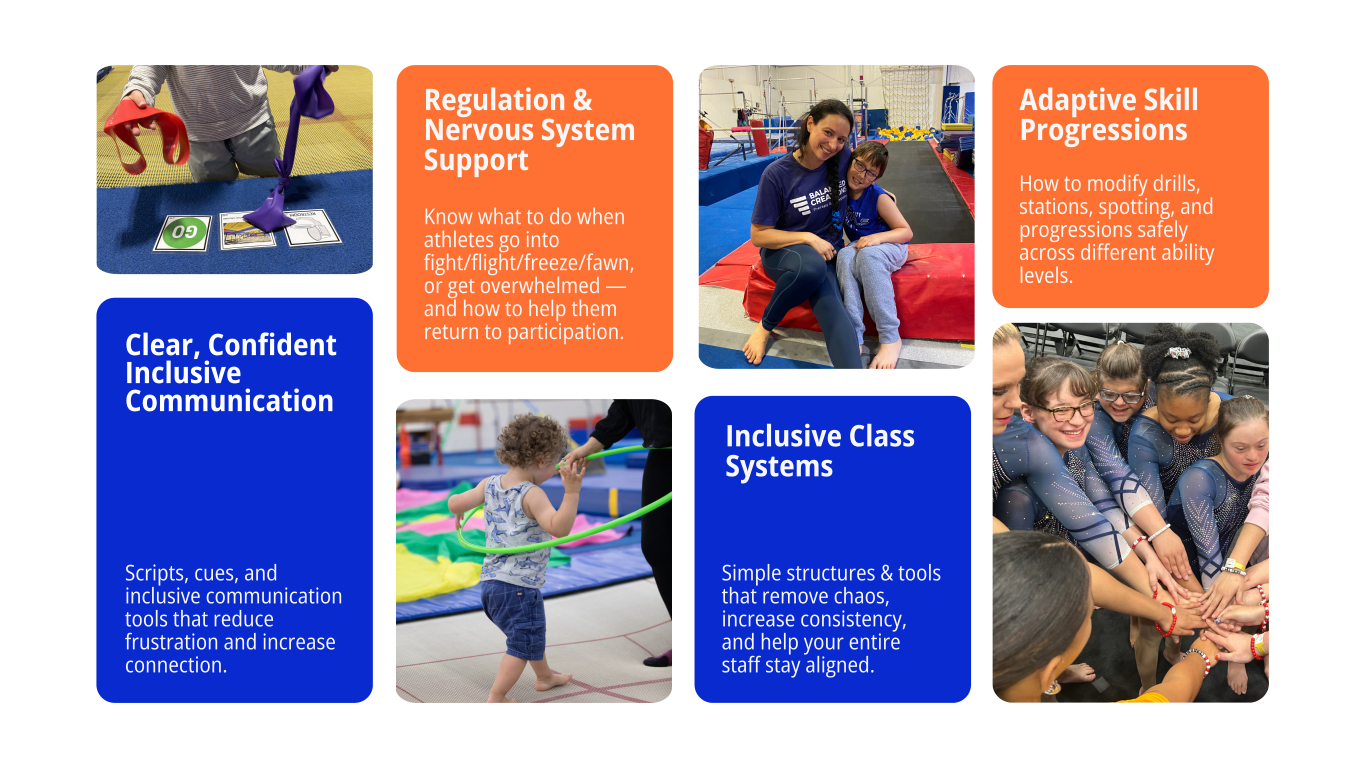
Pillar 1 — Regulation
Help coaches understand athletes’ behavior through a nervous-system lens.
Inside this pillar, your staff learns:
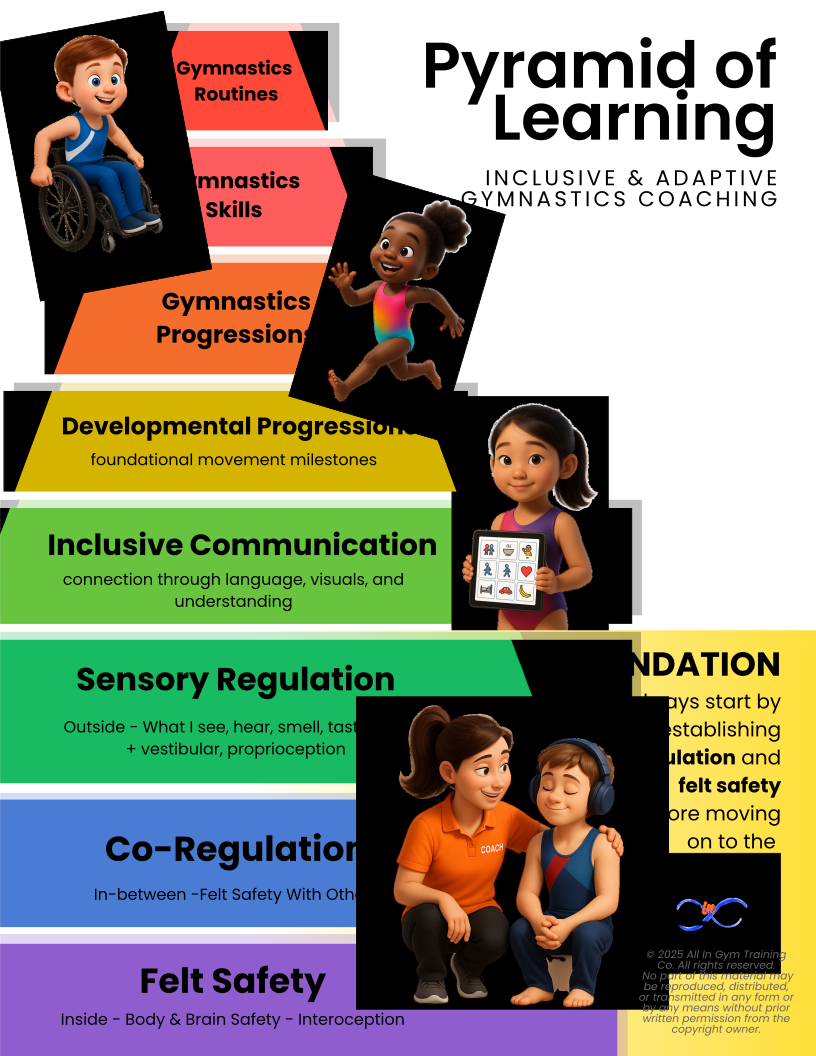
• Felt safety + interoception
• Co-regulation strategies
• Sensory regulation (vestibular, proprioception, environment)
These foundations support every other coaching skill.
Pillar 2 — Communication
Strengths-based, clear, and accessible communication tools for diverse learners.
Inside this pillar:
• Declarative + strengths-based language
• Visual + nonverbal support systems
• Communication that reduces overwhelm and power struggles
Pillar 3 — Environment & Progressions
Create class structures and skill progressions that support every athlete — in real-time, in real gyms.
Inside this pillar:
• Developmental movement progressions
• Adaptive gymnastics progressions
• Applying inclusive progressions to skills + routines
Full syllabus available upon request or after registration.
This course is rooted in
neurodiversity-affirming practice,
strengths-based coaching, and
child-led, relationship-centered approaches.
Every lesson is built for real gyms — with tools your staff can use immediately. By the end of the year, inclusion isn’t something they “learn”… it becomes part of your gym culture.

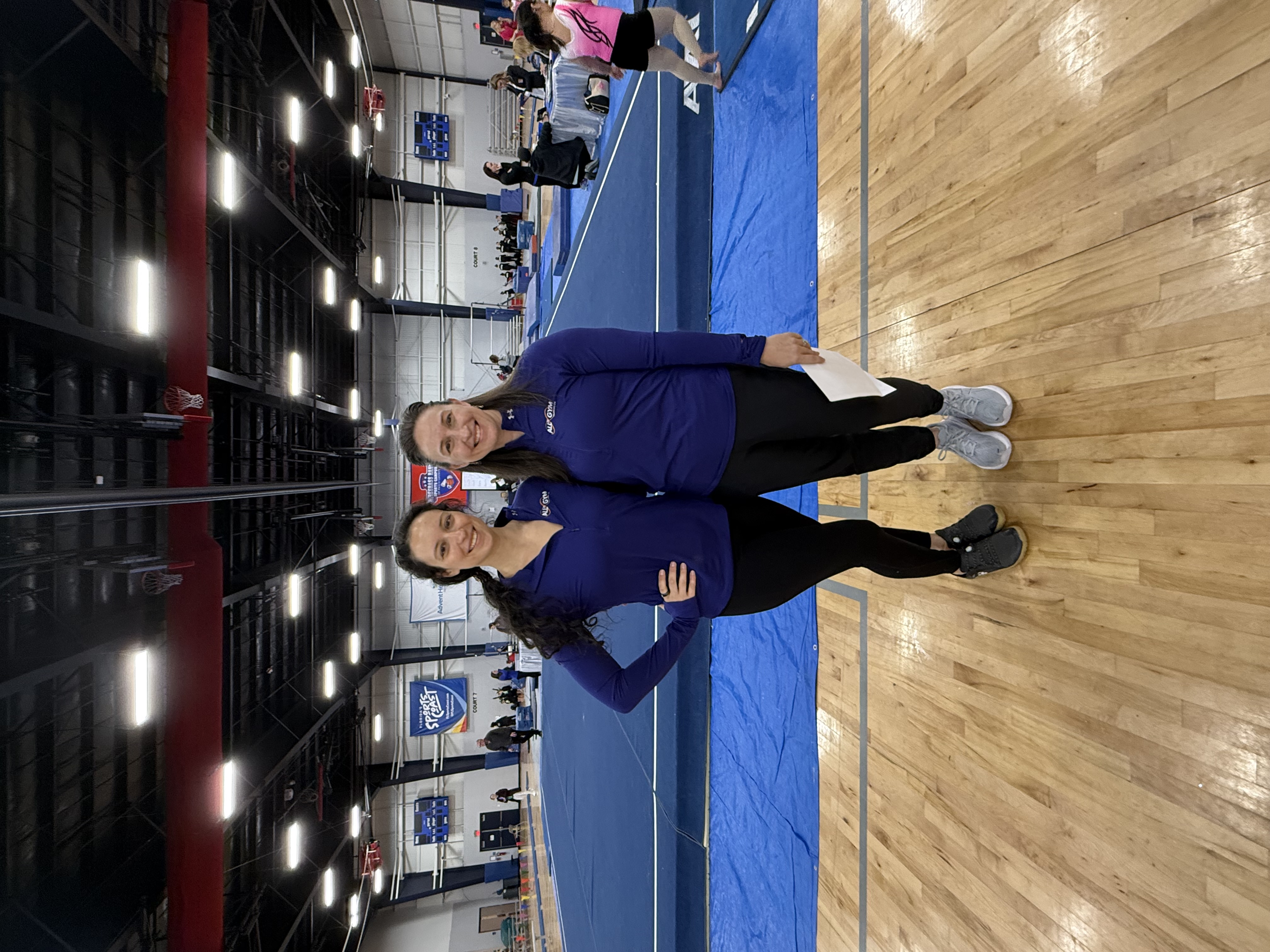
Hi! I’m Dr. Sigourney, PT, pediatric physical therapist, adaptive movement specialist, and co-founder of All-In Gym Training Co.
I help coaches build confident, regulated, inclusive classes using simple, practical strategies that work in real gyms.
I’ve trained thousands of athletes and coaches, and..
My mission is simple:
make inclusive coaching accessible, practical, and sustainable for real gyms.

ONLINE
$249
YEARLY
15–30+ minute monthly training videos
Practical tools + real-gym application
Ongoing email access to AIG educators
Reflection prompts & worksheets
Ready-to-use & print visuals
Full resource library
IN-PERSON
$2400
YEARLY
Includes everything in the online option plus...
Two full in-person training days at your gym
Hands-on practice for your staff
Two virtual follow-up coaching sessions
Ongoing email access to AIG educators
Course Breakdown
Here's what you can your coaches will master month by month:
Month 1
All Behavior is Communication – Reflection Pond
Understand that every action from an athlete is a form of communication. This foundational concept will shape how you approach behaviors.
Month 2
Introduction to Inclusive Gymnastics Coach Staircase – Regulation
Learn about the first step of the Inclusive Gymnastics Coach Staircase: regulation. Understand how the body responds to stress using tools like Dan Siegel’s hand model (flipping your lid), and observe fight, flight, freeze, and fawn responses in your athletes.
Month 3
Physical Manifestations of Emotion
Explore how emotions appear in the body, how to identify these emotions, and how to help athletes name their feelings.
Month 4
Regulation Techniques
Discover multiple regulation techniques and learn how to choose the best one for each athlete's unique needs.
Month 5
Connection & Communication – Co-Regulation
The second step of the staircase focuses on connection. We’ll delve into co-regulation and how to manage your own triggers as a coach. Are you still feeling triggered? Let’s reflect on this together.
Month 6
Declarative Language
Declarative language is a key communication tool. We’ll dive deep into structuring sentences and managing situations when athletes elope (leave the group unexpectedly).
Month 7
Strengths-Based Language
Communicating with Parents and Staff: Learn how to speak about a child’s support needs in a strengths-based way.
Explore how to offer choices within safety boundaries and increase your athlete's autonomy.
Month 8
Music & Play as Communicators and Regulators
Music and play are powerful tools for communication and regulation. You’ll learn how to use these strategies effectively to improve engagement, fun, and creativity.
Month 9
Non-Verbal Communication – Visuals
Visuals can communicate without words. We’ll cover picture communication systems like AAC devices, paper visuals, and child-drawn images. Visuals are not for compliance but for expression.
Month 10
Non-Verbal Communication – Sign Language
Incorporating sign language into your coaching to support athletes who benefit from non-verbal communication.
Month 11
Non-Verbal Communication – Demonstration vs. Tactile Cueing
Learn the pros and cons of both demonstration and tactile cueing, including how to engage mirror neurons and when to use these techniques.
Months 12 & 13
Non-Verbal Communication – Environmental Setup
The physical environment also communicates. We’ll explore how to structure a space that fosters calm, regulation, and focus.
Skill Progressions & The Puzzle Piece Analogy
The third step of the staircase is about skill progression. Learn how to explain the importance of progressions to both athletes and parents and why mastering the basics is crucial for long-term success.
Online Course Registration
I have read and agree to the terms and conditions. Please read before moving on. These will be emailed to you after registration is complete.

© Copyright 2026. All In Gym Training Co. All Rights Reserved.
CONTACT US AT
STAY CONNECTED
Receive updates on upcoming competitions,
host opportunities, and announcements.
ALL-IN FAMILY OF BRANDS
Each brand serves a unique purpose -
together we're building something purposeful.


